
TrueIndex V2: what changed in the technology rating
TrueIndex V2 is not just a new formula. We added resumes, source-level labor-market data, charts, localization, articles, and the proposal Tribune.
hxnnxs
24 May 2026
- Introduction
- What's new
- Labor market on technology pages
- Resumes as a separate signal
- Proposal Tribune
- Rating methodology
- Charts and history
- Two public versions
- How to read TrueIndex V2
- Conclusion
#Introduction
TrueIndex V2 is a major update to the technology rating. We added resumes, exposed labor-market data on technology pages, updated charts, revised the methodology, and prepared Russian and English public pages.
The first version was mostly a table with final scores. V2 adds context: where the data came from, how a technology changed month by month, where company demand is visible, and where specialist supply is high.
#What's new
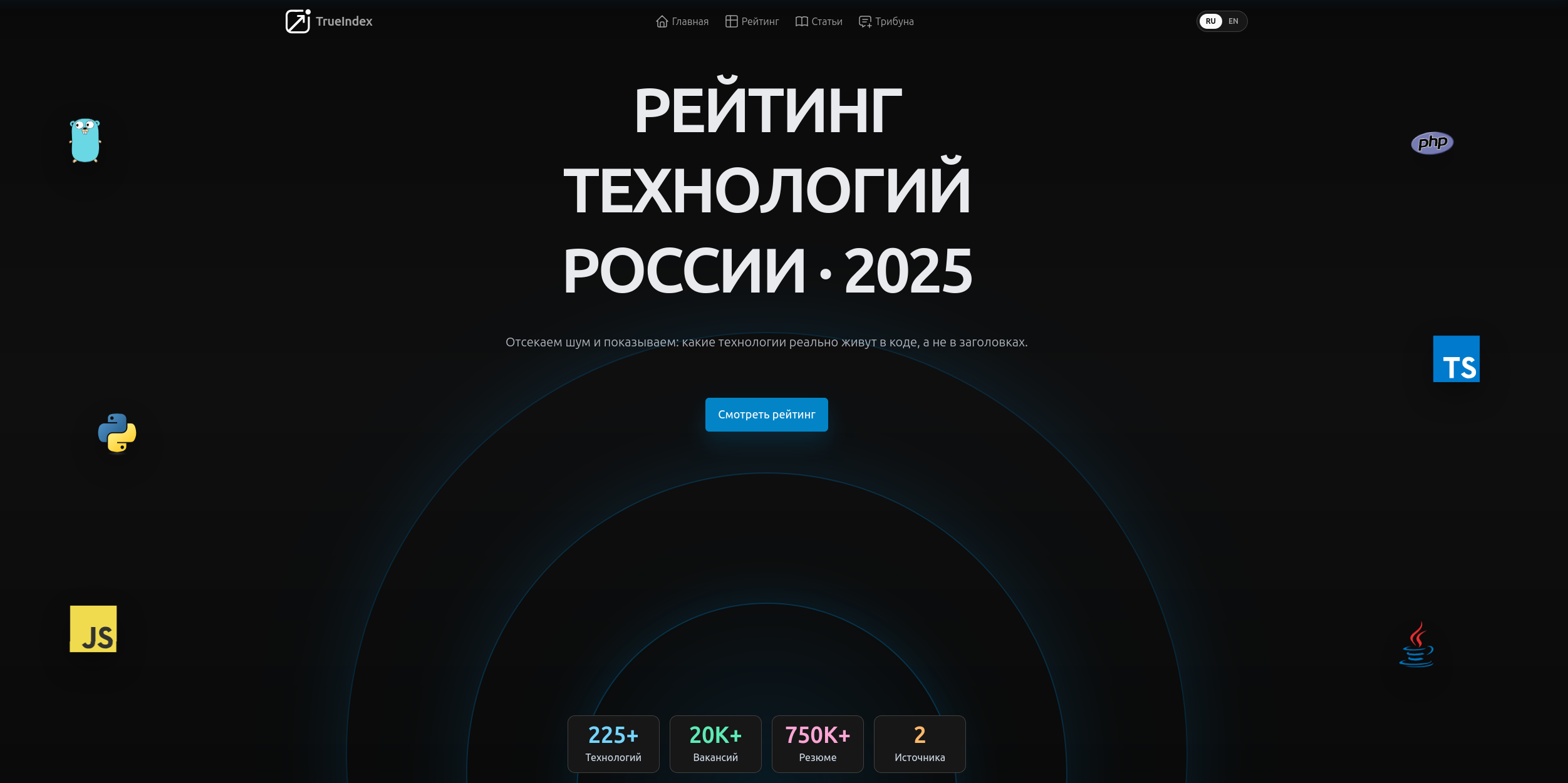
The main change in V2 is that the rating is no longer a single isolated number. The score is now surrounded by data that explains it: vacancies, resumes, sources, score history, and the methodology-change marker.
This changes the role of a technology page. It no longer only answers “where is this technology ranked”. It also helps explain why it is there.
#Labor market on technology pages
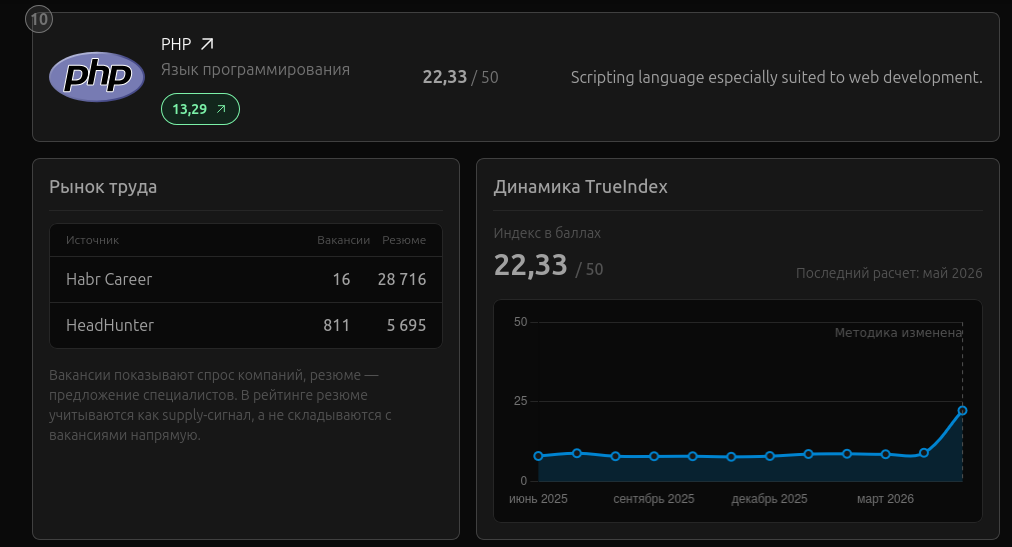
The most visible update is the Labor Market block. Each technology page now shows vacancies and resumes across different sources.
HeadHunter and Habr Career are shown separately. Their audiences, search behavior, and data structures differ, so a single combined total would look cleaner than it really is. Showing sources separately makes the signal easier to read.
#Resumes as a separate signal
V1 focused on demand: companies publish vacancies, technologies appear in requirements, and the rating moves. That works, but it only shows one side of the market.
V2 adds resumes. Vacancies answer “who companies are looking for”. Resumes answer “who is already visible on the market”. These values should not be added together because they describe different events.
Resumes are used as a separate market-balance signal:
market_balance = log1p(vacancies) - log1p(resumes)
If demand is visible and resumes are relatively low, the technology receives a small positive adjustment. If resumes are high at comparable demand, the score receives a small negative adjustment. This is not the main rating factor, but it is important context.
#Proposal Tribune
The idea of using resumes had been suggested in private messages more than once. That is a good example of why proposals should not live only in DMs: other people cannot see the idea, support it, or understand that it is already being discussed.
That is why V2 adds the Tribune - a public place for proposals. You can suggest a technology for the rating, propose a site idea, or support someone else's proposal with an upvote.
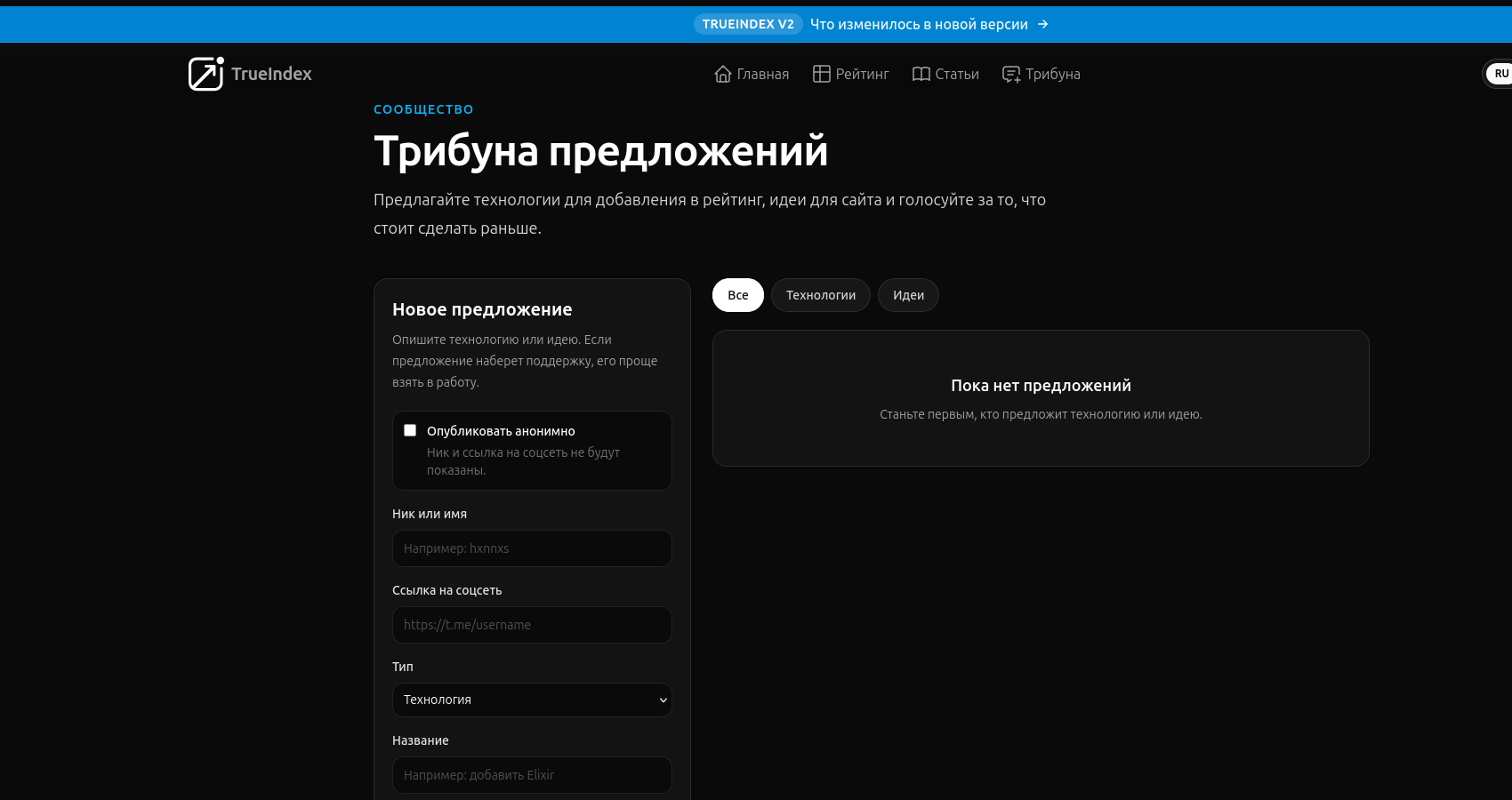
This is more than a feedback form. Upvotes show what matters to the community: which technology should be added, which block should be explained better, and which feature should be built earlier.
The most supported proposals will be looked at first. When a Tribune idea is implemented, we will mention it in future project posts: who proposed it, what was built, and why it was useful. If the author chooses anonymous publishing, the mention will stay anonymous.
#Rating methodology
The methodology changed as well. In V1, large technologies could stretch the scale too much. JavaScript or Python can have many vacancies because they are mature and widely used, not only because they are suddenly growing.
V2 smooths vacancy demand first:
log1p(vacancy_count)
After that, technologies are compared inside their own categories: languages with languages, databases with databases, frameworks with frameworks.
The final score still stays in the 3 to 50 range. It should be read as a technology's position among peers, not as a market-share percentage.
#Charts and history
We replaced the old dynamics rendering with charts and added a methodology-change marker.
This keeps history readable. If the formula changes, old and new points should not pretend to be calculated in the same way. The marker shows where the old logic ends and where V2 begins.
#Two public versions
Public pages now have language-aware URLs: /ru/... and /en/.... The header has a RU/EN switcher, and switching language keeps the user on the same page when possible.
Technology names are not translated. PHP stays PHP, Go stays Go, PostgreSQL stays PostgreSQL. Interface text, descriptions, articles, and metadata are localized.
#How to read TrueIndex V2
TrueIndex V2 shows the visible software-development market: where demand exists, where specialist supply is high, where a technology is strong inside its category, and how that changes month by month.
To reduce noise, vacancies and resumes are not added into one counter, sources are shown separately, IT role filters are applied, and technologies are compared inside their categories.
#Conclusion
V2 moves TrueIndex closer to an analytical tool rather than a plain ranking table. The rating now shows not only a technology's position, but also the data around it: labor market, history, sources, and the balance between demand and supply.
Next, we will improve technology-name matching, add clearer explanations to pages, and expand data sources.